STT hike to address systemic risks, curb excessive speculation in futures and options: Govt
2 min read

The government clarified on Sunday that the Securities Transaction Tax (STT) increase on futures and options contracts targets systemic stability and aims to reduce speculative trading activities.
Speaking to journalists following the Budget 2026-27 announcement, Revenue Secretary Arvind Shrivastava reiterated that the STT adjustment seeks to mitigate financial system vulnerabilities while discouraging market speculation.
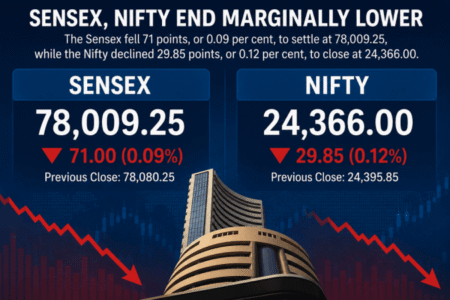
Equity markets responded sharply to the news, plunging over 2% intraday before recovering partially. Online brokerage firms suffered significant losses, with Angel One and Groww shares dropping up to 10% post-announcement. The Nifty Capital Markets index nosedived 6% following Finance Minister Nirmala Sitharaman’s proposal to raise STT rates on futures to 0.05% from 0.02% and on options to 0.15% from 0.1%.
Angel One’s Group Chief Strategy Officer Amit Majumdar noted the company’s diversified revenue streams as a buffer against policy changes. “For Q3 FY26, derivatives brokerage contributed approximately 44% of gross revenue,” he stated, adding that interest earnings and other services reduced dependency on F&O trading revenues.
The STT levy applies to all securities transactions on Indian exchanges, collected at execution regardless of trade profitability. Market analysts attributed the day’s volatility directly to the tax revisions.
Choice Equity Broking analyst Aakash Shah commented: “This substantial rate hike will likely impact derivatives trading volumes significantly, particularly affecting high-frequency traders and cost-sensitive investment approaches.”
About Author