Why Employee Disengagement Hides Behind Good Reviews
11 min read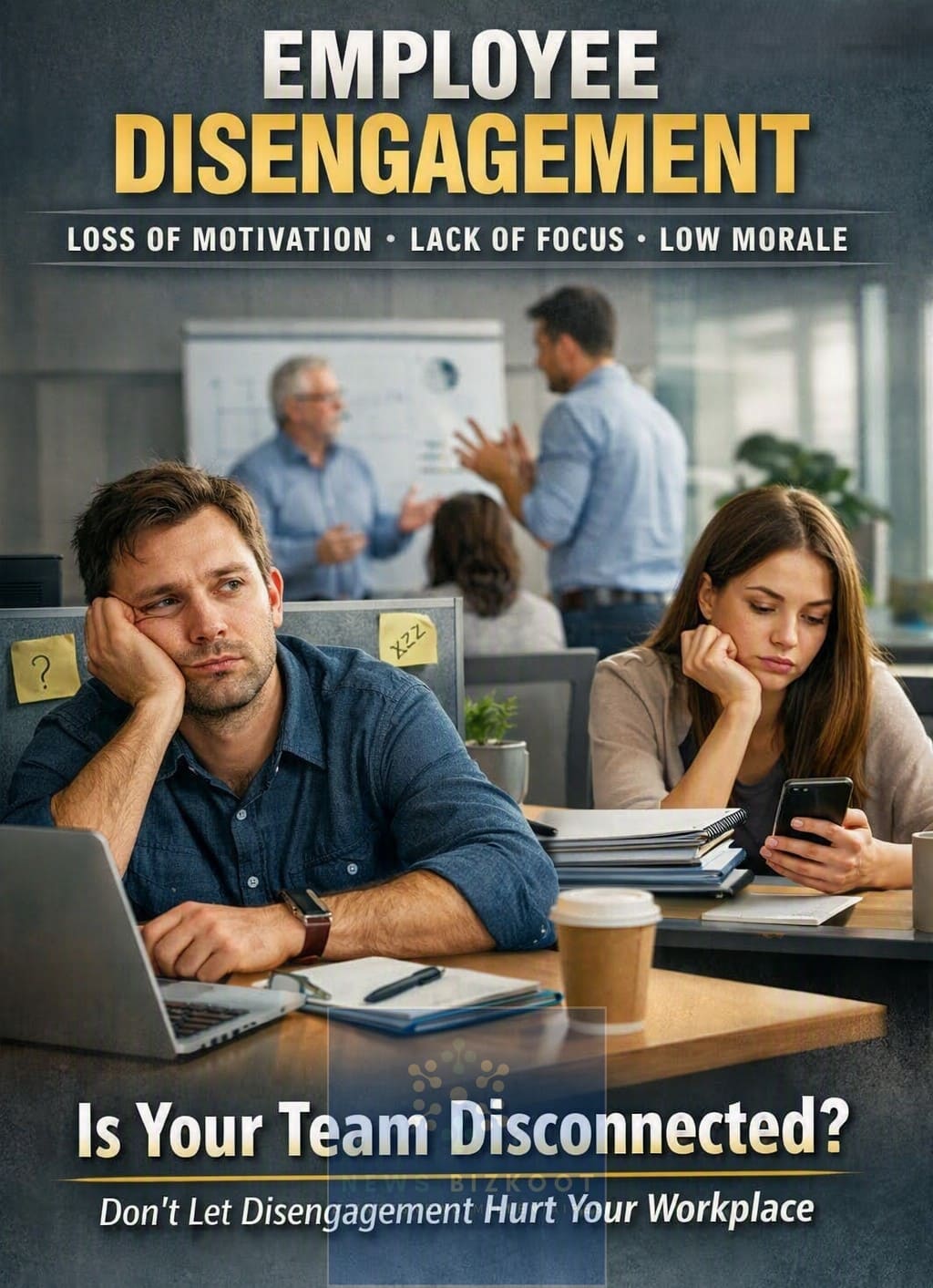
Key Takeaways
- Disengagement shows up as social withdrawal long before it appears in performance numbers, so good review scores can hide it.
- HR dashboards, managers and employees read the same behaviour three different ways, and each view misses part of the story.
- Gallup tracks only 23% of employees in India as engaged; early, direct and private conversations are the cheapest way to catch withdrawal.
Employee disengagement rarely announces itself. It shows up as a once-outspoken team member who stops raising a hand in meetings, stops pushing back on bad ideas, and starts doing exactly what’s asked, nothing less, nothing more, long before any performance number moves.
There’s a specific kind of quiet that shows up in offices right before someone stops caring. Not the quiet of a bad day. Not the quiet of someone who’s naturally reserved. It’s the quiet of a person who used to talk, in standups, in Slack threads, in the hallway after a rough client call, and now doesn’t.
HR looks at the dashboard and sees performance numbers that haven’t moved. The manager looks at the same person and sees “attitude,” maybe even insubordination dressed up as silence. Neither is entirely wrong, and neither is close to right. What’s actually happening to that employee is usually a slower, more specific story than either read gives it credit for, and by the time it shows up as a resignation letter, the story has already ended.
What Employee Disengagement Actually Looks Like Before It Has a Name
Employee disengagement is not an HR euphemism for laziness, and it’s rarely sudden even when it looks that way. As Wikipedia’s overview of employee engagement frames it, engagement is fundamentally an emotional and psychological investment in an organization’s goals, not just attendance and output, which is exactly why its absence rarely shows up where attendance and output are measured. Disengagement is the gradual withdrawal of discretionary effort, the extra ten percent a person gives when they actually care about the outcome, not just the paycheck. That ten percent is invisible on a KPI sheet until the day it’s gone, which is exactly why it blindsides managers who were only ever measuring output.
The early signs are almost always social before they’re ever measurable:
- A once-vocal team member stops volunteering opinions in meetings and answers only when directly asked.
- Ideas and pushback that used to come unprompted now have to be pulled out with a direct question.
- Work gets done, but strictly to spec, no extra polish, no proactive flagging of problems down the line.
- Informal chats, team lunches, and after-hours banter get quietly declined, one at a time.
- The employee starts doing the job exactly as written and stops improvising around it.
Three People, One Employee, Three Completely Different Stories
This is where most workplace interventions go wrong. HR, the manager, and the employee are often looking at the same six weeks of behavior and walking away with three unrelated conclusions.
| Lens | What they notice | What they conclude |
|---|---|---|
| HR | Performance metrics, attendance, and review scores are technically unchanged | “No issue on record, nothing to escalate yet.” |
| Manager | Fewer questions, less pushback, shorter answers in 1:1s | “Their attitude has changed. Maybe they’ve checked out.” |
| Employee | Their input hasn’t changed anything in months; the effort-to-impact ratio has collapsed | “Why would I keep raising my hand for a room that stopped listening?” |
None of these three views is fabricated. Each is built from a real, narrow slice of evidence. The problem is that employee disengagement almost never shows up in the metric HR is trained to watch, and it almost never announces its cause the way a manager’s read of “attitude” implies. The employee is usually the only one of the three who actually knows what changed, and they’re the one least likely to be asked directly.
Why the Data and the Instinct Both Miss the Real Story
HR dashboards are built to catch performance failure, missed deadlines, falling output, attendance gaps. That’s a lagging indicator by design; it’s meant to confirm a problem that’s already advanced, not to catch the quieter withdrawal that precedes it by months. A person can hit every deliverable and still be functionally checked out, because discretionary effort was never the thing being measured.
A manager’s read of “attitude,” meanwhile, is a story about intent, and intent is the hardest thing to observe accurately from the outside. Reading silence as insubordination assumes the employee is choosing to withhold effort as a form of protest or defiance. Sometimes that’s true. More often, discretionary effort is simply the first thing to go and the last thing HR notices, what looks like attitude is exhaustion, disillusionment, or a quiet loss of trust that the effort will matter.
What the India Numbers Show
According to Gallup’s most recent country-level tracking, 23% of employees in India are engaged at work, against a South Asia regional average of 21% and a global average of 20%, and that Indian figure reflects a seven-point drop from the prior three-year rolling average. That’s not a handful of outlier employees quietly checking out. It’s a workforce-wide pattern that individual managers keep encountering as if it were a personal, isolated case.
The Real Reasons a Competent Employee Goes Quiet
Burnout Without the Drama
Burnout doesn’t always look like breakdowns and sick leave. The more common version is functional burnout, someone still shows up, still hits deadlines, but has quietly stopped investing anything beyond the minimum required to stay off a performance improvement plan. Participation is one of the first casualties because participation costs energy the person no longer has spare.
A Collapsed Recognition Loop
Employees who raise ideas and watch them disappear into nothing, no credit, no follow-through, no acknowledgment, learn fast that speaking up doesn’t change outcomes. Slack’s research on workplace disengagement notes that engaged people ask questions, challenge ideas, and help shape the conversation, while disengaged employees fade into the background, physically present but mentally checked out. That fade is frequently a rational response to a recognition system that stopped rewarding the behavior it claims to want.
A Quiet Loss of Psychological Safety
If an idea, a disagreement, or a piece of honest feedback was met with defensiveness, dismissal, or visible irritation even once, many employees won’t test that water again. They don’t announce the decision. They simply recalibrate how much of themselves they bring to the room going forward, and “how much of themselves” is precisely what participation measures.
Career Stagnation Dressed as Contentment
A competent employee with no visible next step, no promotion track, no stretch project, no signal that growth is even on the table, often stops competing for attention they’ve concluded won’t be rewarded anyway. From the outside this can look like calm. It’s frequently the earliest, quietest stage of someone mentally preparing to leave.
A Manager Relationship That Quietly Soured
Not every case of disengagement traces back to the company at large; a surprising share traces back to one relationship. A single manager who takes credit for a team win, dismisses a concern too quickly, or plays favorites in a way that’s obvious to everyone but never named out loud can be enough to make a previously engaged employee decide it isn’t worth the emotional cost of trying anymore. The employee doesn’t file a complaint. They just stop bringing their best self to that particular relationship, and because the manager is usually the first person to notice performance, they’re also the last person the employee wants to be vulnerable with.
What It Actually Costs When Nobody Catches It in Time
The business case for taking this seriously isn’t abstract. A disengaged employee doesn’t just contribute less; they quietly lower the ceiling for everyone around them. Teams recalibrate to the new normal without ever naming it: the person who used to catch a scheduling conflict before it became a client-facing problem stops flagging it, and eventually someone else has to absorb that vigilance or the mistake simply happens.
The Hidden Cost of Lost Knowledge
There’s also a slower, less visible cost in institutional knowledge. Competent employees who’ve quietly disengaged tend to be the ones who leave first once a better offer appears, precisely because they’ve already done the emotional work of detaching. By the time HR notices a resignation, the employee has usually been mentally gone for months, and whatever tacit knowledge they held about clients, processes, or edge cases leaves with them, largely undocumented because nobody thought to ask while they were still around.
None of this shows up cleanly on a quarterly report. It shows up as onboarding costs for the replacement, a temporary dip in team output nobody can quite explain, and a manager wondering, a little too late, what they missed.
The India Context: This Isn’t a Handful of Isolated Cases
The scale here matters for how HR and managers should be interpreting individual cases. SHRM India’s research on why employees disengage found that only 32% of Indian employees are engaged, 48% are not involved, and 19% are actively disengaged, meaning over two-thirds of the workforce is disengaged to some degree, and that 86% of Indian employees report struggling or suffering in the workplace even when engagement scores look acceptable on paper.
A Survey Score Can Still Hide Struggle
An analysis from Praxis Business School’s research on Indian employee wellbeing put it plainly: despite low levels of thriving, India maintained a relatively high employee engagement rate of 32% at the time, well above the global average of 23%, a gap the report flagged as an early-warning signal rather than good news, since high engagement scores and high personal struggle were showing up in the same workforce simultaneously.
Put those two data points next to each other and the picture sharpens:
an employee can score as “engaged” on a survey and still be privately burning out. That’s exactly the gap a manager reading only attitude, or an HR team reading only metrics, will miss every time.
What HR and Managers Can Actually Do About It
None of this requires a new engagement platform or a company-wide culture overhaul to start addressing. The interventions that actually work tend to be small, specific, and aimed at the individual rather than the org chart.
- Ask directly, early, and privately — before disengagement shows up in a metric, not after. “You’ve been quieter lately, what’s going on?” costs nothing and surfaces more than any survey.
- Close the recognition loop — when an employee’s idea is used, credited, or even explicitly rejected with a reason, it signals their input still matters. Silence after a suggestion is the fastest way to train someone out of offering another one.
- Separate the performance data from the participation data — a flat KPI sheet is not proof that nothing is wrong; it’s proof that nothing measurable has broken yet.
- Give visible next steps, even small ones — a stretch assignment, a skill they’ve asked to build, a clear look at what promotion actually requires. Stagnation is one of the quietest disengagement triggers precisely because it’s rarely discussed openly.
- Protect psychological safety after disagreement, not just before it — how a manager responds the first time someone pushes back determines whether that person ever pushes back again.
- Track participation trends, not just performance trends — a simple, honest note after each 1:1 about whether someone seemed more or less engaged than usual builds a pattern HR can actually use, long before a metric ever confirms there’s a problem.
The common thread across all of this is timing. Every one of these interventions is dramatically cheaper and more effective in the first few weeks of disengagement than in the final ones, which is exactly why waiting for a KPI to confirm the problem is the single costliest habit an organization can keep.
Conclusion
A competent employee doesn’t usually stop participating because they’ve become a worse employee. They stop participating because something, recognition, safety, growth, energy, quietly stopped adding up, and silence became the most rational response available to them. HR’s dashboards will keep missing it until the metrics move. Managers will keep misreading it as attitude until they ask instead of assume.
The fix isn’t complicated, but it does require going to the source. The next time a normally engaged colleague goes quiet, the most useful question isn’t “what’s wrong with their performance”, it’s “what changed for them, and when.”
Frequently Asked Questions
Is employee disengagement the same thing as quiet quitting?
They overlap but aren’t identical. Quiet quitting specifically describes an employee deliberately scaling back to contracted duties as a boundary-setting choice. Employee disengagement is the broader emotional and behavioral withdrawal; it can look like quiet quitting, but it can also show up as burnout, disillusionment, or a general fade that the employee hasn’t consciously decided on at all.
How is disengagement different from someone who is just introverted or naturally quiet?
The signal isn’t the volume of a person’s baseline participation, it’s the change from their own baseline. A naturally quiet employee who has always contributed sparingly in meetings isn’t disengaged; a previously vocal employee who has gone quiet over weeks or months almost always is.
Can employee disengagement be reversed once it starts?
Often, yes, particularly in the earlier stages, before the employee has mentally started job hunting. The fastest lever is usually a genuine, specific conversation that asks what changed, rather than a generic engagement survey or a performance review that never addresses the real shift.
Should managers bring up disengagement directly with the employee?
A direct, private, non-accusatory conversation almost always works better than waiting for the annual review cycle or a survey to surface it. Framing it as curiosity, “I’ve noticed you’re quieter in meetings lately, is everything okay?”, lands very differently than framing it as a performance concern.
What role does the manager specifically play in disengagement, versus company culture?
A significant one. Gallup’s global workplace research has repeatedly found that managers account for the large majority of the variance in team-level engagement, meaning the immediate manager relationship, more than broad company culture, is usually the first place to look when a specific employee’s participation drops.
Explore more in Workplace Psychology & Human Behavior at Work on NewsBizkoot.com.
Disclaimer Statement
The articles, insights, motivational suggestions, mental wellness perspectives, neuro-linguistic communication concepts, personal growth guidance, self-esteem development, and self-confidence enhancement tips published by Amita Nene are intended solely for educational, informational, motivational, and self-development purposes.
The views and recommendations shared are based on the author’s extensive corporate experience of over 25 years in Human Resources, corporate training, employee engagement, behavioral development, mental wellness awareness, and academic interactions with corporate professionals and MBA institutions, along with independent research and practical observations in these domains.
These articles are not intended to substitute professional medical advice, psychological diagnosis, psychiatric treatment, therapy, or clinical counselling. Readers experiencing emotional distress, mental health concerns, or psychological conditions are advised to seek guidance from qualified medical practitioners, licensed psychologists, psychiatrists, or certified mental health professionals.
The content published should be interpreted as general self-improvement and awareness material. Individual outcomes may vary based on personal circumstances, mindset, health conditions, and professional guidance received. The publisher, platform, and author shall not be held liable for any decisions, actions, or interpretations made by readers based on the published content.
Content is copyrighted to Newsbizkoot.com Digital Publications. All Rights Reserved. 2026-27.


