Beyond the City Limits: How GoFresho Is Building Modern Retail for Rural Andhra Pradesh
4 min read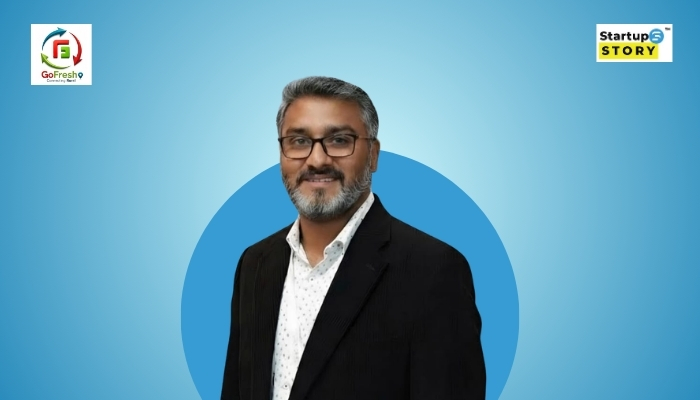

For the past ten years, India’s retail sector has been tackling a recurring challenge—starting with organized supermarkets, moving to rapid‑delivery services, and seeing firms vie on speed, ease, and assortment, largely confined to urban areas.
Naresh Vadday, who holds an MBA from Chennai University, chose to step away from that competition. Having spent close to twenty years leading retail operations at Tata, Samsung, and Airtel—mostly serving city shoppers—he turned his focus toward a neglected segment: small towns and villages where formal retail has barely penetrated.
He remarked, “In these towns the experience of buying everyday goods is lacking—not only in what’s on the shelf but also in product quality and the prices consumers face.”
That insight led to the creation of GoFresho, a retailer that develops large‑format supermarkets in the remote parts of Andhra Pradesh, launching its first outlet in East Godavari in 2020.
The Rural Retail Gap Nobody Was Solving
His professional background was almost wholly urban; leading retail divisions in telecom, his mandate was to improve customer experience for shoppers already served by supermarkets, delivery platforms, and rival chains.
The issue that lingered wasn’t urban; it lay a few hundred kilometers away—a market ignored by organized retail. Communities of 10,000+ residents require the same basics—groceries, FMCG items, household goods—as city dwellers, yet they lack the retail infrastructure to satisfy those needs.
Consequently, prices for identical goods frequently exceed urban levels, even though local incomes are lower.
Product quality varied, and the typical shopping trip meant visiting a modest kirana shop with scarce inventory and few alternatives.
No player was addressing this gap, so in 2020 Naresh resolved to fill it.
Retail Built for Rural Economics, Not Urban Ones
GoFresho’s approach stems from the inability of big retail chains to make profits in places such as the rural mandal headquarters of East Godavari; the firm was deliberately designed to succeed where they cannot.
Large‑format retailers usually rely on uniform store layouts, city‑level overheads, and labor costs suited to urban settings—a cost model that fails in areas with limited purchasing power.
GoFresho flips this model.
Its stores are constructed, staffed, and supplied locally, keeping expenses low enough to be profitable in locales most chains deem unworkable. Each location spans about 2,000 sq ft and carries groceries, FMCG items, stationery, and daily household goods, aiming to emulate a modern supermarket rather than a typical kirana shop.
As a result, GoFresho currently faces little organized competition; major chains show no imminent interest in these areas, and local options seldom rival its scale or service level.
Building Beyond the Store: A Private Label and a Delivery App
What began as a simple store network has grown into a modest retail ecosystem.
The company now markets its own private‑label grocery line, repackaging and processing goods under the GoFresho brand, which improves quality control and adds a profit margin within the supply chain. In March it also introduced a delivery app that typically delivers orders within one to one‑and‑a‑half hours.
The service does not aim to rival the ten‑minute rapid‑delivery models of urban quick‑commerce; instead, it seeks to provide rural shoppers with a convenience level they have seldom enjoyed.
Scaling From East Godavari to the Next Phase of Growth
At present GoFresho operates six outlets, all located in East Godavari district of Andhra Pradesh, backed by a workforce of about eighty handling store management, delivery, and a warehouse that processes its private‑label goods.
Revenue rose from roughly ₹3.3 crore in 2020 to ₹11.2 crore in FY 26, reflecting an average yearly increase of nearly 31 % and was attained without any outside investment.
The forthcoming growth stage concentrates on deepening its footprint in Andhra Pradesh rather than venturing into new states. GoFresho aims to broaden its reach within the same deep‑rural market it originally served, seeking financing to achieve a five‑year goal of ₹250 crore in turnover.
The Bet Behind the Bet
While much of Indian retail keeps asking how to capture the next metropolis, Naresh posed a contrasting question: perhaps the real opportunity lies not in another city but in the myriad towns the sector has overlooked.
This conviction underpins GoFresho. It is not about offering quicker shopping where alternatives already abound, but about providing the first genuine retail choice in underserved locales—delivering better prices, improved availability, and a shopping experience rural India has long deserved.
Whereas many chains concentrate on squeezing more outlets into already crowded urban markets, Naresh Vadday continues to develop in East Godavari, believing this is precisely where the next phase of India’s retail evolution will unfold.
About Author