Beyond the Ballot: 5 Surprising Realities of Indian Citizenship We Need to Talk About
6 min read
Oplus_16908288
to Talk About
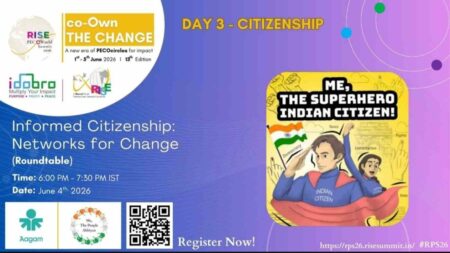
India’s electorate just crossed 97 crore voters. A roundtable of civic
strategists explains why that milestone still isn’t translating into
real democratic participation.
Social Impact | Governance & Civic Engagement | India
QUICK SUMMARY
India’s electorate has crossed 97 crore voters, but a roundtable of
civic strategists warns that record registration numbers mask a deeper
participation paradox: citizens are showing up to vote without holding
their representatives accountable afterward. Drawing on insights from
Bharti Dasgupta of Augam, Anshul Tiwari of Youth Ki Awaaz, and other
civic leaders, this piece unpacks five overlooked realities blocking
meaningful democratic engagement in India.
From the documentation barriers facing Care Leavers to the untapped
civic potential of teenagers, the roundtable argues that citizenship is
a systemic muscle, not a once-in-five-years transaction. The discussion
also points to grassroots tools such as PECOWorld that are helping move
civic action from private WhatsApp groups into public,
coalition-building registries.
The Participation Paradox
India recently hit a staggering milestone: an electorate of 97 crore
voters. But as a journalist covering social impact, a biting irony sits
behind these record-breaking numbers. While the country celebrates
massive registration drives, a sense of urban and youth apathy continues
to erode the core of democratic engagement. More citizens are signing up
to vote, but the actual quality of participation — the ability to demand
better roads, safer streets, and cleaner air — feels paralyzed.
Why the disconnect? If more people are showing up at the booth, why does
governance still feel like it’s on autopilot? The reality is that
citizenship isn’t a five-minute act performed every five years; it’s a
cultural and systemic muscle that India has largely forgotten how to
flex. Based on insights from a recent high-level roundtable of civic
strategists, here are five takeaways that redefine what it means to be a
citizen in modern India.
01 Voting Is a Numbers Game; Democracy Is a Governance Game
There is a massive, overlooked difference between “voter participation”
and “democratic participation.” As Bharti Dasgupta, co-founder of Augam,
argues, the current system treats voting like a numbers game — a race to
see who can lure the most people to the booth through the promise of
“freebies.”
To transition from a welfare state to a development state, the vote must
stop being viewed as a response to a favor and start being treated as a
tool for accountability. The citizen’s role doesn’t end when the ink on
their finger dries; it begins when they hold their elected
representative’s feet to the fire over local resources and programs.
“Voter participation will actually be the democratic participation… My
vote, my elected representative, my governance, my development
programs.”
— Bharti Dasgupta, Co-founder, Augam
02 The 13-Year-Old Citizen: Why Adolescence Is the Real Polling Booth
It is a fatal mistake to assume a young adult will wake up on their 18th
birthday and suddenly become an informed, active citizen. Anshul Tiwari,
founder of Youth Ki Awaaz, identifies this as a deep-seated “cultural
problem.” If a child spends their entire adolescence — from age 13 to 17
— being told their opinion is worthless and their values are for others
to decide, they won’t magically value their political voice at 18.
This systemic silencing inhibits young people’s ability to turn natural
idealism into change-making power. Interestingly, today’s civic values
aren’t being built in conventional civics classes; they are being shaped
by popular culture. Tiwari points to hip-hop artists rapping in local
languages about climate change as doing more to engage youth than any
traditional curriculum. Building real citizens means addressing a
culture that treats youth perspectives as secondary to “experience.”
03 The Documentation Barrier: India’s “Invisible” Electorate
For a significant portion of the population, the barrier to democracy
isn’t apathy — it’s paperwork. This is most visceral for Care Leavers:
youth transitioning out of institutional care or Child Care Institutions
(CCIs).
Take the case of Aditya Yatri. Despite holding an MSW and earning a PhD
in 2022, Yatri struggled to cast his first vote until he was 25 years
old, because he lacked a legitimized proof of address. When these young
people leave CCIs at 18, they often have no documentation, effectively
making them invisible to the state. This isn’t just a bureaucratic
glitch; it is a fundamental exclusion from the mainstream of society.
Without proof of residence, citizens are barred from the very electoral
processes designed to protect them.
04 Why “Cleaning the Streets” Is the Best Entry Point for Democracy
Abstract concepts like constitutionalism or democratic theory are often
too “expensive” for marginalized youth. As strategist Ankush Singh
notes, when daily survival is the priority, the cognitive energy
required to connect with abstract ideals becomes a luxury many can’t
afford.
The proposed solution is radical local action. Jinesh Zaveri, National
Secretary for the Citizens’ Rights and Protection Committee, proposes a
provocative reset: 30 days of mandatory local service, such as cleaning
the streets or assisting traffic police. By dealing with tangible,
high-impact issues like waste collection and water safety, young people
see immediate results from their involvement. Action builds ownership —
when a citizen fixes a local problem, they gain the confidence to
eventually tackle the abstract, systemic failures of the state.
05 Scaling Change Through “Safe Spaces” and Tech Networks
Individual grit is inspiring, but systemic change requires scale. That
calls for a two-pronged approach: safe spaces for depth of engagement,
and technology for its reach.
Ankush Singh emphasizes the need for spaces that hold “difficult
conversations” across faiths and identities — spaces that allow
communities to move past dialogue for the sake of dialogue and toward
genuine understanding. Simultaneously, technology must make grassroots
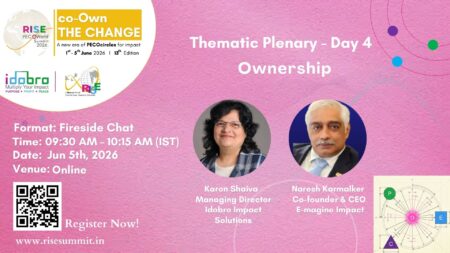
work visible. Karon Shaiva points out that most civic action is
currently buried in isolated WhatsApp groups. By using platforms like
PECONet or PECOWorld, these isolated efforts can move from private chats
into public registries — a shift from invisible to visible that lets
small groups form real coalitions, moving the needle from individual
complaints to structured, collective action.
The Five Realities at a Glance
The Reality The Barrier The Fix
Numbers vs. governance Voting treated as a transaction, not
accountability Track representatives after the vote, not just at the
booth
The 13-year-old citizen Youth opinions dismissed until age 18 Build
civic values through culture, not just curriculum
The documentation barrier Care Leavers lack proof of address Legitimize
alternate proof-of-residence pathways
Street-level entry Abstract civics feels out of reach Local service
builds ownership before ideology
Scaling coalitions Civic action buried in private chats Safe spaces +
public tech registries like PECOWorld
Conclusion: From Dialogue to Coalition
Informed citizenship is not a one-day event; it is a continuous state of
participation, documentation, and local action. It requires a shift in
identity itself. As India looks toward the future of its democracy, the
roundtable’s conclusion leaves a haunting question: are citizens willing
to build the coalitions necessary to last beyond election day?
“Can we move from being “beneficiaries” of a system to “co-creators” of
our own governance?”
Frequently Asked Questions
Q: What is the “participation paradox” in Indian democracy?
A: It refers to the gap between record voter registration — India’s
electorate now stands at 97 crore — and the actual quality of civic
engagement, where accountability and follow-through after elections
remain weak.
Q: Why don’t young Indians engage with civic issues before turning 18?
A: Civic strategists point to a cultural pattern where adolescents aged
13 to 17 are told their opinions don’t matter, so the habit of civic
participation never forms before voting age.
Q: What documentation barriers do Care Leavers face when voting?
A: Youth exiting Child Care Institutions often lack a legitimized proof
of address, which can delay their first vote by years even after they
are otherwise fully qualified.
Q: How can local action build long-term civic engagement?
A: Tangible local service, such as street cleaning or traffic
assistance, gives young citizens visible results and a sense of
ownership that can later extend to engaging with larger systemic issues.
By Amita Nene | amita.nene@newsbizkoot.com
Content is copyrighted to Newsbizkoot.com Digital Publications. All
Rights Reserved. 2026-27.

About Author